Best paint finishes for steel garage doors in humid climates
Steel garage doors face sun, rain, airborne salt, dust and temperature swings throughout the year. A finish that looks attractive in a showroom can lose adhesion when moisture reaches a chipped edge, while coastal air adds salt that accelerates corrosion. The best paint finishes for steel garage doors in humid climates therefore combine a sound barrier over the steel, careful preparation and a UV-resistant topcoat.
For Australian homeowners, there is no single universal answer. Brisbane and the Gold Coast bring long, humid summers; Sydney suburbs can experience damp coastal air and salt spray; Melbourne has cool, changeable conditions that keep coatings wet for extended periods. Inland cities may see less salt, but intense sunlight and rapid temperature changes still test colour and gloss.
Factory powder coating is often the simplest option for a new door, while an older door may need a complete repaint with primer and a premium topcoat. The most reliable result comes from identifying the existing coating, repairing damaged metal and matching the product to its exposure, rather than reaching for a general-purpose household paint.
How humidity reaches the steel
| Coating option | Protection in humid air | Colour and appearance | Practical fit | Main drawback |
|---|---|---|---|---|
| Factory polyester powder coat | Strong, even barrier with good corrosion resistance | Good colour retention; satin appearance is practical | Most new residential garage doors | Chips can expose steel if left untreated |
| Coastal-specified powder system | Enhanced salt and corrosion resistance when properly formulated | Generally good UV and colour stability | Homes near surf or highly saline areas | Must be specified, not assumed from the colour name |
| Epoxy primer with 2K polyurethane | Excellent multi-coat corrosion barrier | High gloss or satin, with strong UV resistance | Full refinishing of prepared steel | Professional surface preparation and application are usually needed |
| 2-pack acrylic urethane | Very good when applied over clean, prepared metal | Excellent colour retention and a smooth finish | DIY projects with sound steel and careful preparation | Strict preparation and curing requirements |
| Exterior alkyd enamel | Moderate protection and easier recoating | Useful sheen, but generally less durable | Sheltered doors on a limited budget | Shorter wet and UV exposure service life |
Humidity rarely penetrates a sound coating. It finds pinholes, scratches, poorly sealed edges and fasteners, where a water film can sit against steel. Salt lowers the resistance of that film and makes corrosion easier to start, particularly within a few kilometres of the ocean.
Condensation also forms when a cool night follows a warm, humid day. Water then collects along the bottom rail, window frames and panel seams, especially if a close-fitting seal traps it. Keep drains, weatherseals and panel edges clear so the coating can dry rather than sit in a salty bath.
Fasteners deserve special attention because mismatched steel can rust independently and leave rust staining below each fixing. Stainless or suitably galvanised hardware, sealed fixing holes and regular inspections help prevent small defects from becoming widespread problems.
Factory finishes versus field-applied coatings
A factory polyester powder coat is an efficient all-round choice for routine residential exposure. It cures into a hard, even film and usually needs no field primer, which makes it attractive for a new installation. The key is to buy from a supplier that states the coating specification and exposure suitability clearly.
For an existing door, a liquid system can provide a higher build than a simple repaint. A corrosion-inhibiting epoxy primer, sometimes zinc-rich on suitable prepared steel, followed by a 2K polyurethane or acrylic-urethane topcoat creates a layered barrier. Wet-film thickness and the manufacturer’s cure window matter; applying extra coats does not correct a contaminated or badly prepared surface. A clear topcoat can add gloss, but it may yellow and never replaces corrosion protection.
Test any unknown coating before sanding or painting, and check whether the door is galvanised, pretreated or previously coated. A glossy finish may require adhesion testing, while loose rust must be removed. If bare metal is exposed, use a product approved for that substrate; ordinary interior enamel, household primer and untested combinations can fail quickly. Two-pack products containing isocyanates should be sprayed only with suitable equipment and ventilation.
A finish-selection checklist for Australian conditions
Use the site’s exposure, not just its rainfall total, to choose a system. The following checklists separate coastal or persistently humid locations from inland, sheltered and mixed-climate properties, while keeping the decisions practical.
Coastal and persistently humid sites
- Request a documented coating system with enhanced salt and corrosion resistance.
- Use compatible epoxy primer and UV-stable polyurethane on doors being refinished.
- Seal panel edges, joints and fixings so water cannot collect against steel.
- Upgrade vulnerable fasteners to compatible stainless or suitably galvanised hardware.
- Rinse away salt deposits and inspect for chips, rust stains or bubbling.
Labels such as marine-grade are not a substitute for a technical specification. Ask the door or coating supplier for the primer, topcoat, film build, cure times and warranty exclusions. Products sold under familiar Australian paint brands may still vary by line, so confirm that the exact can is approved for metal, exterior use and the expected exposure.
Inland, sheltered and mixed-climate sites
- A factory polyester powder coat usually offers efficient everyday protection.
- Choose exterior 2-pack acrylic urethane when a smooth finish and easy rolling appeal.
- Select lighter colours to reduce solar heat absorption on west-facing garages.
- Favour satin or textured finishes when hiding fine marks and water spotting matters.
- Schedule washing, inspection and touch-ups before the busy wet season.
Colour and sheen should support the location, not distract from it. Pale grey, cream and softer blues often disguise salt residue better than a stark dark finish, while satin surfaces tend to make minor orange peel and dust less conspicuous. Always judge colour from physical samples under local daylight.
Design choices for Australian homes
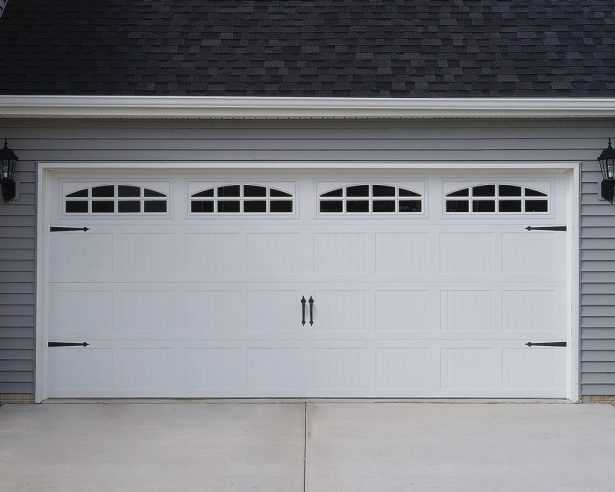
Finish selection also shapes the street-facing appearance of a home. Panel profiles, window surrounds, colour and hardware should work as one composition rather than as isolated upgrades. For broader ideas about door proportions and exterior details, the garage door design inspiration gallery can help homeowners visualise options before talking with a supplier.
Australian colour planning often starts with familiar local references. Compare a door swatch with Colorbond steel roofing, rendered façades and exterior paint ranges sold under names such as Dulux and Wattyl. A charcoal sectional door may suit a contemporary brick home, while sand, moss or cream palettes that echo Colorbond roofing can blend with fences and gardens.
Local buying patterns also influence the result. Wide single and double garage doors are common on suburban blocks, and sectional or roller systems collect water at guides, bottom seals and lintel gaps. Check those components as carefully as the paint. In coastal districts, corrosion-resistant tracks and fixings should be quoted at the same time as the upgraded finish.
Maintain the finish and make a durable choice
A garage is often the first visual transition between work and home, so a well-considered finish contributes to a calmer arrival. A reminder of connection can complement that practical goal by adding a thoughtful dimension to the space.
Maintenance is simple but consistent: rinse salt and dust with fresh water, use a soft brush and mild detergent, and dry the lower edge. Avoid abrasive pads, strong solvents and aggressive pressure washing that can force water into joints. Inspect the coating twice a year and after severe storms, looking for chalking, loss of gloss, cracks, bubbles and rust around fasteners.
Choose a complete coating system for your door’s location and condition, confirm the hardware specification, and schedule the work before the next humid season. If rust has spread beneath the coating or the panels are warped, obtain a professional assessment rather than adding another topcoat over the problem. A documented, correctly prepared system will give your steel garage door the strongest chance of staying sharp, protected and attractive for years.